The Queen of Southern Gothic Americana and Austin Songwriting
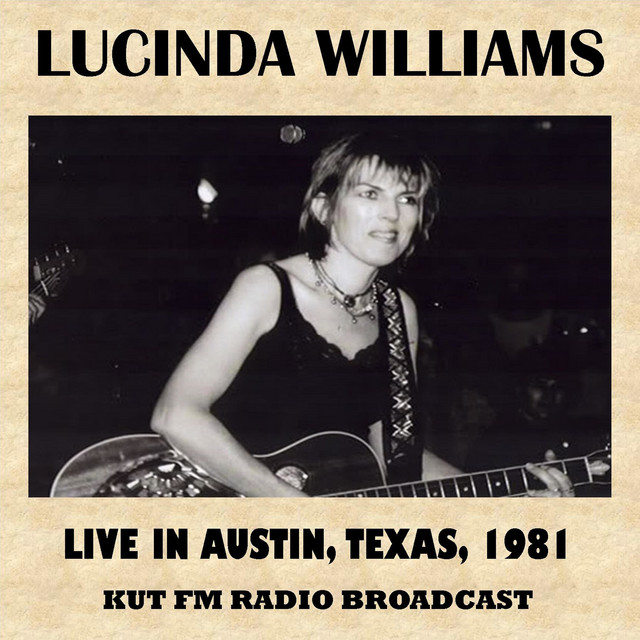
While cosmic cowboys, garage rockers, and blues prodigies were laying down Austin’s sonic foundations, Lucinda Williams introduced a raw, unflinching vulnerability that forever elevated the city’s songwriting standard. Blending country, blues, folk, and rock with Southern gothic poetry, Williams became a central figure in Austin’s late-1970s and 1980s singer-songwriter renaissance, helping forge the blueprint for modern Americana music.
Origin Story: From Lake Charles to the Cactus Cafe (1970s–1980s)
Born in Lake Charles, Louisiana, in 1953, the daughter of literature professor and poet Miller Williams, Lucinda grew up immersed in the rich literary and musical traditions of the American South. After spending her formative years soaking in delta blues and traditional folk across Louisiana and Texas, she moved to Austin in the late 1970s.
- The Austin Songwriters’ Circle: Williams arrived in Austin just as the city’s intimate listening rooms were coming into their own. She quickly found a home at venues like the Cactus Cafe and Spinning Wheels, forming close artistic bonds with songwriting titans like Townes Van Zandt, Guy Clark, and Blaze Foley.
- The Perfectionist’s Craft: Rejecting commercial music industry formulas, Williams spent years meticulously honing her songs. Her self-titled 1988 album on Rough Trade Records became a watershed moment, proving that country and rock could be infused with literary weight and unvarnished emotion.
Defining Austin’s Americana & Live Performance Ethos
Lucinda Williams’ time in Austin helped establish the city as a global sanctuary for authentic, lyric-driven roots music:
- Bridging Genres: Long before “Americana” was recognized as an official genre by the Recording Academy, Williams bridged the gap between Austin’s indie-rock underground and its traditional country roots.
- Grammy Recognition & Global Reach: When Mary Chapin Carpenter recorded Williams’ track “Passionate Kisses” in 1993, it won the Grammy Award for Best Country Song, bringing international acclaim to the Austin songwriting scene. Her landmark 1998 masterpiece, Car Wheels on a Gravel Road, solidified her status as an icon of roots rock.
- SXSW Fixture: Across decades, her electrifying, emotionally charged showcases at South by Southwest (SXSW) and the Continental Club served as essential rites of passage for music fans and visiting critics.
Archives, History, and Archival Legacy
The history and impact of Lucinda Williams are extensively documented across Texas music repositories, including the Austin History Center and the Texas Music Museum. These archives preserve vintage performance flyers from her early Cactus Cafe gigs, oral history interviews, and press coverage tracing her evolution from an obscure acoustic performer to an international Americana pioneer.
Williams was inducted into the Austin City Limits Hall of Fame in 2021, celebrating her dozens of iconic performances on the long-running PBS series and her enduring legacy as an architect of Texas music history.

Trajectory & Discography
Selected Albums
| Year | Album Title | Label | Notes |
| 1979 | Ramblin’ on My Mind | Folkways | Traditional blues and country cover debut |
| 1980 | Happy Woman Blues | Folkways | Her first album composed entirely of original songs |
| 1988 | Lucinda Williams | Rough Trade | Breakthrough self-titled LP; a cornerstone of 80s alt-country |
| 1992 | Sweet Old World | Chameleon | Acclaimed, deeply personal album addressing loss and memory |
| 1998 | Car Wheels on a Gravel Road | Mercury | Grammy-winning Americana masterpiece and commercial peak |
| 2001 | Essence | Lost Highway | Atmospheric, critically lauded follow-up featuring intimate vocal performances |
| 2020 | Good Souls Better Angels | Highway 20 | Fierce, blues-heavy, political late-career highlight |
Key Songs & Fan Favorites
- “Passionate Kisses”
- “Car Wheels on a Gravel Road”
- “Right in Time”
- “Can’t Let Go”
- “Drunken Angel” (Written for Austin songwriter Blaze Foley)
- “Lake Charles”
- “Sweet Old World”
- “Change”
- “Essence”
Stay tuned for our weekly Austin Music History Series
Austin Music History Series Ep #13


