The Cosmic Trio That Connected Lubbock to Austin
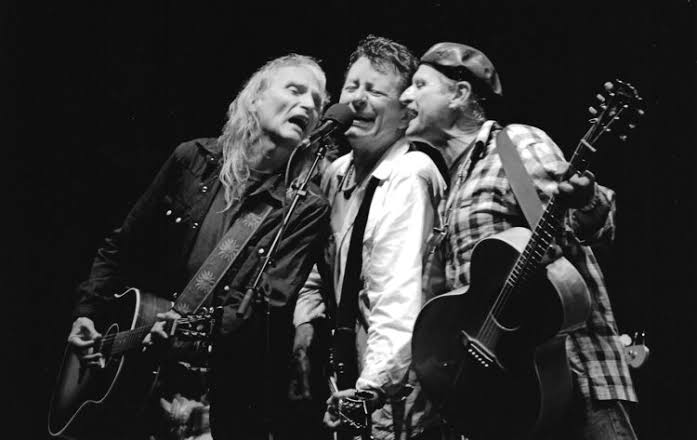
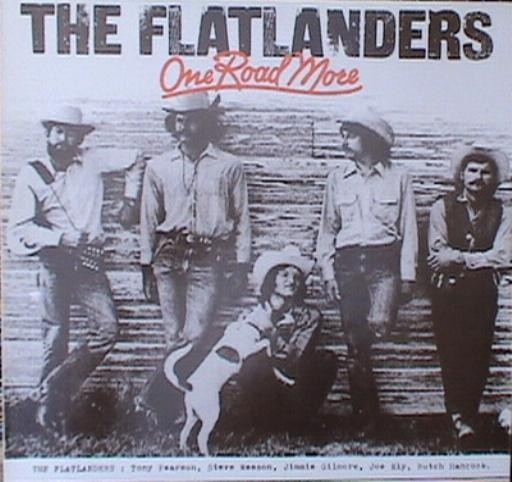
While Willie Nelson is often credited as the catalyst for Austin’s musical explosion, The Flatlanders—comprised of Jimmie Dale Gilmore, Butch Hancock, and Joe Ely—were the essential bridge. They brought the stark, poetic sensibility of West Texas to the burgeoning capital, infusing traditional country roots with a sophisticated, counterculture worldview. Their influence defined the “cosmic cowboy” era and solidified Austin as a sanctuary for progressive songwriters.
Origin Story: The Lubbock Nexus and the “One-and-Done” Album (1972)
The Flatlanders formed in Lubbock, Texas, in 1972. Jimmie Dale Gilmore, Butch Hancock, and Joe Ely were already fixture friends and mutual admirers of each other’s songwriting within the tight-knit West Texas scene. Looking to capture their unique chemistry, they traveled to Nashville to record.
- The Nashville Session: They recorded a single album, often referred to as “All American Music,” produced by Plantation Records. The sound was a distinctive blend of old-time country, folk storytelling, and a hint of philosophical oddness (epitomized by Hancock’s saw-playing).
- The Invisible Release: The album was essentially unreleased and undistributed at the time. A single, “Jimmie Dale Gilmore’s Dallas,” was pressed but failed to chart. Disheartened, the band dissolved. The three members then famously relocated to Austin, pursuing individual careers that would shape the city’s music scene for the next decade.
Defining Cosmic Country in Austin
When Gilmore, Ely, and Hancock arrived in Austin, the city was just starting to embrace its “Live Music Capital” identity.
- Merging Cultures: The Flatlanders (and their individual followings) brought a unique intellectual credibility to the Armadillo World Headquarters and Soap Creek Saloon scene. They proved that country music could be as literate, trippy, and authentic as any rock or folk music, connecting the “kickers” with the “longhairs.”
- The Living Legend: For decades, their legacy rested entirely on the almost mythical reputation of that “lost” 1972 album, which circulated among collectors and musicians on bootleg tapes. This myth fueled Austin’s songwriting renaissance.
Legacy, Reunions, and Archival Preservation
The Flatlanders’ true impact was recognized much later. Their story is preserved in the Texas Music Museum in Austin, which showcases early performance flyers and details their crucial migration from the Llano Estacado.
In 1990, the lost recordings were finally released by Rounder Records as “More a Legend Than a Band.” This official release solidified their place in history. The band has since reunited for several projects, including the soundtrack for the film The Horse Whisperer and several new acclaimed studio albums, demonstrating that the cosmic connection forged in 1972 remains strong.
Trajectory & Discography
Albums
| Year | Album Title | Label | Notes |
| 1972 | All American Music | Plantation | Unreleased originally; the “lost” recordings |
| 1990 | More a Legend Than a Band | Rounder | The official re-release of the 1972 Nashville sessions |
| 2002 | Now Again | New West | Acclaimed first album of new material in 30 years |
| 2003 | Wheels of Fortune | New West | Follow-up studio album of originals and covers |
| 2004 | Live ’72 | New West | Archival live recordings from their early Lubbock days |
| 2009 | Hills and Valleys | New West | Fourth reunion album; nominated for a Grammy |
| 2012 | The Odessa Tapes | New West | Archival recordings from their very first 1972 session |
Key Songs & Fan Favorites
- “Dallas”
- “One Road More”
- “Tonight I’m Gonna Go Downtown”
- “Waiting for a Train”
- “Keeper of the Mountain”
- “Bluebird”
- “Wavin’ My Heart Goodbye”
- “Julia”
- “She Smiles Like a River”
Stay tuned for our weekly Austin Music History Series
Austin Music History Series Ep #5


