Before Austin became globally renowned as a blues mecca, W.C. Clark was laying the foundation. A master guitarist, soulful vocalist, and generous mentor, Clark served as the essential bridge between Austin’s historic Eastside African American blues community and the downtown club scene that exploded in the 1970s and 80s. Without Clark’s guidance, key figures like Stevie Ray Vaughan, Jimmie Vaughan, and Angela Strehli may never have found their signature sound.
Origin Story: From the Eastside Church Choir to the Victory Grill (1950s–1960s)
Born Wesley Curley Clark in Austin in 1939, Clark grew up surrounded by music in a deeply religious household. He sang in his church choir and learned guitar at age 16, quickly immersing himself in the vibrant blues and R&B scene of East Austin.
- The Victory Grill Apprenticeship: By the late 1950s, Clark was playing bass and guitar at historic East Austin venues like the Victory Grill and the Skyline Club, sharing stages with touring blues titans like T-Bone Walker, B.B. King, and Bobby “Blue” Bland.
- Southern Feeling: In the early 1970s, Clark joined forces with a young Stevie Ray Vaughan and singer Angela Strehli to form Triple Threat Revue, which evolved into Southern Feeling. During this era, Clark took a teenage Stevie Ray under his wing, mentoring him on tone, groove, and stage presence.
- Co-Writing History: During their time together, Clark co-wrote “Cold Shot,” a track that would later become one of Stevie Ray Vaughan & Double Trouble’s biggest mainstream hits.
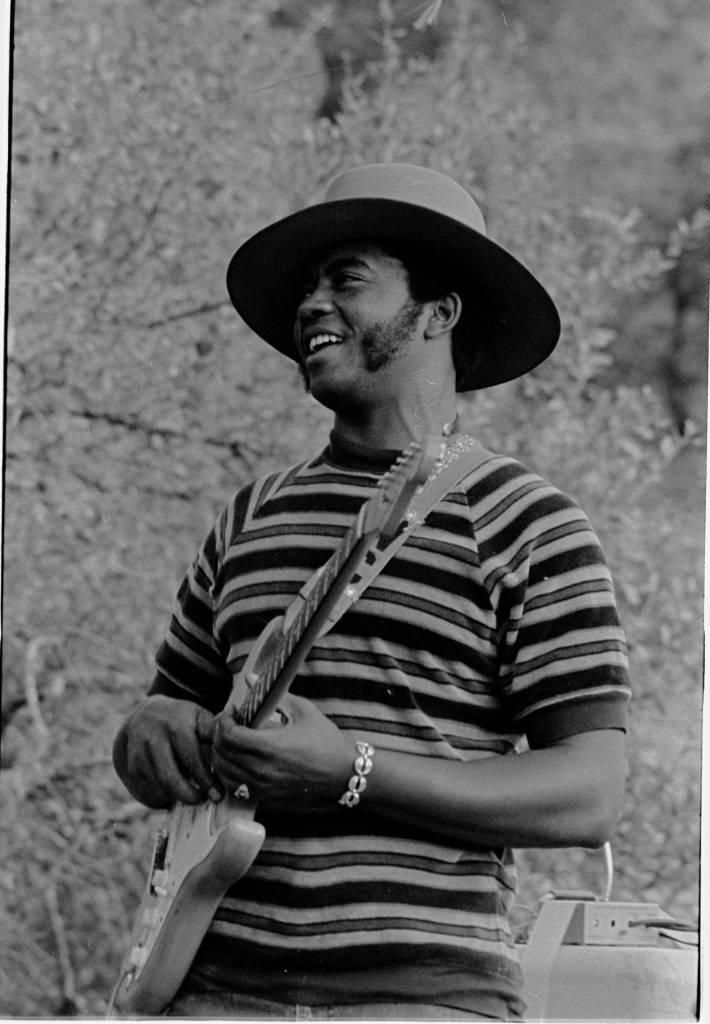
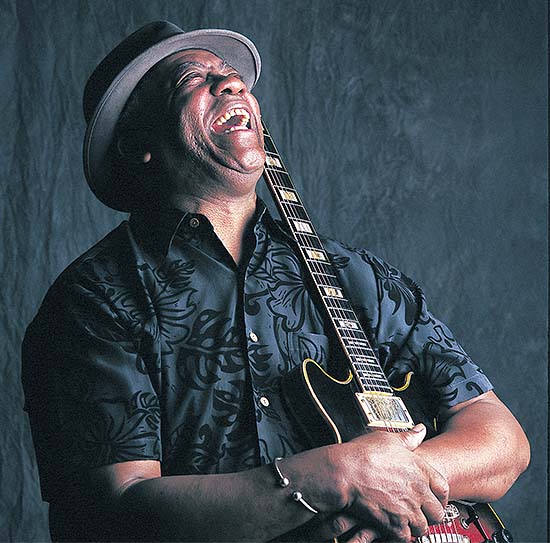
The Anchor of Antone’s and the W.C. Clark Blues Revue
When Clifford Antone opened his venue on 6th Street in 1975, W.C. Clark became the resident authority on authentic Texas blues.
- The Blues Schoolmaster: For decades, Clark hosted famous Monday night jam sessions at Antone’s and the Continental Club. His stage became the ultimate proving ground for young talent arriving in Austin, earning him the affectionate title “The Godfather of Austin Blues.”
- A Beacon of Soul: Clark’s unique ability to blend deep, gospel-infused soul vocals with stinging, melodic guitar solos showcased a distinct regional variation of Texas blues that defined the city’s late-night soundtrack.
Archival Legacy and Honors
W.C. Clark’s immense contributions are extensively archived at the Austin History Center and the Texas Music Museum, which feature oral histories, vintage performance flyers, and archival photos from his early days on East 11th Street.
In 2023, the City of Austin officially declared “W.C. Clark Day,” honoring his six decades of cultural influence. Following his passing in March 2024, Texas musicians and music historians alike commemorated Clark as the irreplaceable cornerstone upon which Austin’s modern blues reputation was built.
Trajectory & Discography
Selected Albums
| Year | Album Title | Label | Notes |
| 1987 | Something for Everybody | Boot House | Rare solo debut album showcasing his soulful R&B range |
| 1994 | Heart of Gold | Black Top | Breakthrough national release that established his solo career |
| 1998 | Lover’s Plea | Black Top | Acclaimed album featuring horn-heavy soul-blues arrangements |
| 2002 | From Austin With Soul | Alligator | Critically praised debut on Alligator Records |
| 2004 | Deep in the Heart | Alligator | Won the Blues Music Award for Soul Blues Album of the Year |
| 2011 | Were You Satisfied? | Live Oak | Energetic late-career release celebrating his live band sound |
Key Songs & Fan Favorites
- “Cold Shot” (Co-written by Clark)
- “Rough Edges”
- “I Want to Shout About It”
- “Heart of Gold”
- “Where There’s Smoke There’s Fire”
- “Let’s Straighten It Out”
- “Broke Down Engine”
- “Are You Lonely Too”
Stay tuned for our weekly Austin Music History Series
Austin Music History Series Ep #8


